
Fast track psychotherapy training can mean a few weekends of introduction or a two-year diploma. It rarely means you will be fully qualified as a psychotherapist in a year. A fast track usually speeds up one stage of training, not the whole journey. Registration as a UK Council for Psychotherapy (UKCP) psychotherapist typically takes three to six years part-time, so a fast track course and that route lead to different outcomes. Choosing well means knowing which outcome you want.
What does fast track psychotherapy training actually include?
There is no fixed definition, so the label covers three different things:
- An introduction. Short foundation courses show you what the work involves and are sometimes a prerequisite for longer training. They do not prepare you to see clients.
- A compressed professional course. The same learning delivered over fewer months, with a heavier weekly load. Placement and assessment still apply.
- A shortened pathway. Credit for earlier study or experience can reduce repetition. Providers decide this case by case, so get the decision in writing.
Psychotherapy training UK: how the main routes compare
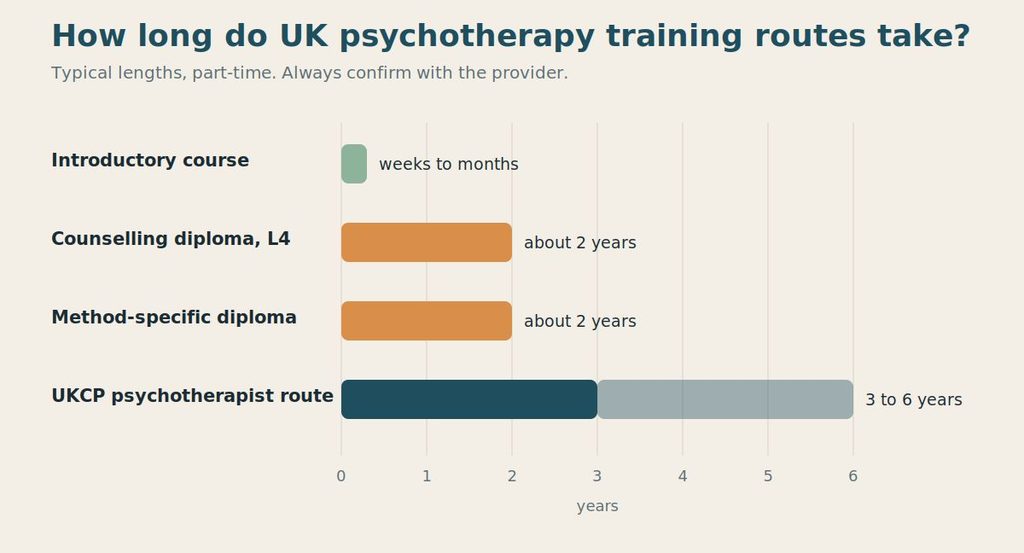
If you’re researching psychotherapy training UK providers, this table shows where each route leads. Lengths are typical, so confirm them with the provider.
| Route | Typical length | Best for | Watch for |
| Introductory course | Weeks to months | Testing whether the work suits you | Does not qualify you to see clients |
| Counselling diploma (e.g. CPCAB Level 4) | About two years part-time | Counselling in agency settings | Check placement hours and personal therapy requirements |
| Level 5 psychotherapeutic counselling | A further stage after Level 4 | More independent practice | Extra time and cost |
| UKCP psychotherapist route | Three to six years part-time | The widest recognised psychotherapist title | The longest and most expensive route |
| Method-specific diploma (e.g. The Walters Method) | Two years | Practising one specific approach | Not a general route to UKCP registration |
Why the job title tells you so little
“Psychotherapist”, “counsellor” and “therapist” are not legally protected titles in the UK. What carries weight is who awards your qualification, how many supervised client hours it includes, and which register you can join afterwards. Clinical psychologists are different. That title is protected and sits on the Health and Care Professions Council register.
Which route suits you?
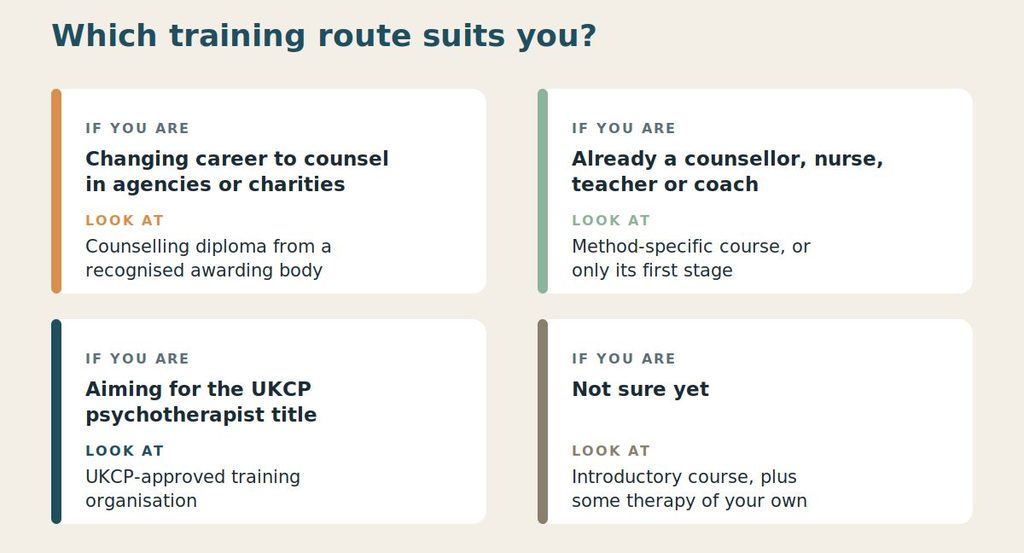
- Changing career to counsel in charities or agencies. Look at counselling diplomas from a recognised awarding body.
- Already a counsellor, nurse, teacher or coach. A method-specific course, or only its first stage, may add the tool you want, within your existing scope.
- Aiming for the UKCP title. Start with UKCP-approved training organisations. A fast track certificate won’t get you there.
- Unsure. Take an introductory course and have some therapy of your own first.
Questions to ask before you pay
- Who awards the qualification, and is the provider approved to deliver it?
- How many supervised client hours are included?
- Is personal therapy required, and is it included in the fee?
- Which Professional Standards Authority Accredited Register could you join afterwards?
- Will it meet the entry requirements for the setting you want to work in, such as the NHS?
- What does the full cost cover?
Be wary of promises of being “fully qualified” within weeks or months, no named awarding body, or pressure to pay a deposit quickly.
Fast track psychotherapy training with The Walters Method
The Walters Method (TWM) is a body-based, felt sense approach. Its Level 4 diploma is a CPCAB qualification delivered over two years. The diploma route begins with a self-paced personal development year and monthly one-to-one mentoring. Year two adds peer practice, CPCAB-approved assignments and a minimum of 50 supervised clinic hours. No previous experience is required to start.
The method was developed by Clare Walters, who founded The Walters Method and leads its practitioner training and supervision. The Walters Method (TWM) is a body-based, felt sense approach. Its Level 4 diploma is a CPCAB qualification delivered over two years.
It suits people who want to practise this particular approach, in private practice or alongside another profession. It is not a general route to UKCP registration. As TWM’s common questions explain, some roles, including NHS posts, may need additional qualifications. The course content lists the first-year units, and the team offers a personal call before you commit.
Training to be a therapist? How to find a psychotherapist for your own sessions
Many training providers require or expect trainees to have personal therapy, and even where they don’t, it is useful preparation. If you need to find a psychotherapist, check these before booking:
- Registration. Look for a practitioner on a Professional Standards Authority Accredited Register, such as UKCP’s national register of psychotherapists and psychotherapeutic counsellors.
- Training and hours. Ask what they trained in and how long they have practised.
- Approach. Make sure it suits what you want from the sessions.
- Fit. A short first conversation tells you a lot.
If you’d like to experience TWM before deciding on training, Bridget Jones is one option. She is a registered general nurse with a master’s in health education and health promotion, and she teaches the mindfulness course within TWM’s training programme. She sees clients online as well as in person. TWM practitioners are accredited in the method, DBS-checked, in regular supervision and insured. If your chosen training body specifies that personal therapy must be with a particular type of registered therapist, check that requirement first.
Quick answers
Can I become a psychotherapist in two years?
You can finish a Level 4 diploma in about that time. Independent practice usually needs further training or supervised experience, and UKCP registration takes longer.
How do I find a therapist I can trust?
Choose someone on an Accredited Register, or a regulated professional such as a clinical psychologist on the HCPC register.
Is fast track psychotherapy training worth it?
It is worth it if the outcome matches your goal. Check the awarding body, the supervised hours and the register before you enrol.